Curriculum, Skills, and Projects
Nowadays, it's not what you know that matters, but what you can do.
Due to the technological change that occurred in the 90s, it is now very easy to find any kind of knowledge on the internet. This has made memorizing facts obsolete. Instead, a sense of responsibility, independence, and everyday skills have come to the forefront. As THS wants to ensure the best possible future for school leavers, THS.Homeschooling accompanies students on this learning mountain climb – and trains precisely these skills.
This happens on 3 levels: the content of instruction, the skills, and the projects. The „unit of measurement“ of the curriculum are the skills. These are several content areas that we have bundled together into one skill. This way, students don't just learn theoretically, but understand the context and application of their knowledge – the big picture becomes clearer.
1. Curriculum
What is that?
A learning content is a concrete piece of information or a clearly defined subject matter that a student learns.
Example
- How does laundry detergent work chemically?
- What is cotton?
- How is a t-shirt made?
- How does a washing machine work?
2. Ability
What is that?
A skill connects multiple learning contents into a practical context. It makes knowledge applicable in everyday life.
Example: Doing laundry
Here, knowledge from various teaching materials is used – with the goal of: clean clothes in everyday life.
So, a skill is something that is applicable in real life.
3. Project
What is that?
A project bundles multiple skills into a more contextually relevant, real-world application.
Example
The students plan and operate their own laundromat for a week. In addition, they learn:
- Bookkeeping
- Marketing
- Inventory management
Faith as an Integral Part of Education
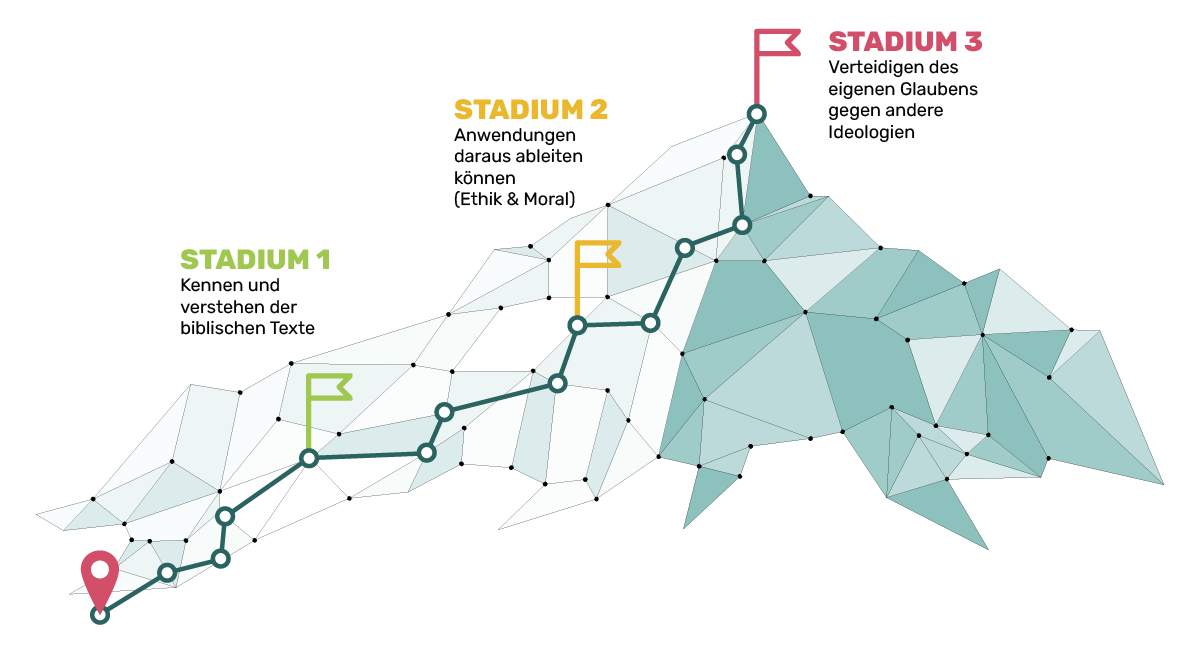
Knowledge without character makes one arrogant. Thus, THS's mission is to influence the character of its students so that they can be „salt and light“ in society according to God's command. Even though a large part of this educational work falls to the parents, THS has set its own standards. To achieve this, we guide students through 3 stages during their school education. Students thus have a protected space, but do not grow up in a „pious bubble.“.
Parental Integration
Parents remain their children's most important rope partners on the learning journey. It is their role to accompany their children in completing projects and homework.
THS has developed a special dashboard – a portal access – for parents, where they can see the assignments their children have, as well as the grades achieved on past assignments. Parents can also see what their children are learning by having access to the teaching materials.
Regular meetings in the form of digital „parent-teacher nights“ are offered by THS to clarify questions and introduce parents to their children's next learning steps. Parent groups help them stay in touch with each other.

Subject system & levels
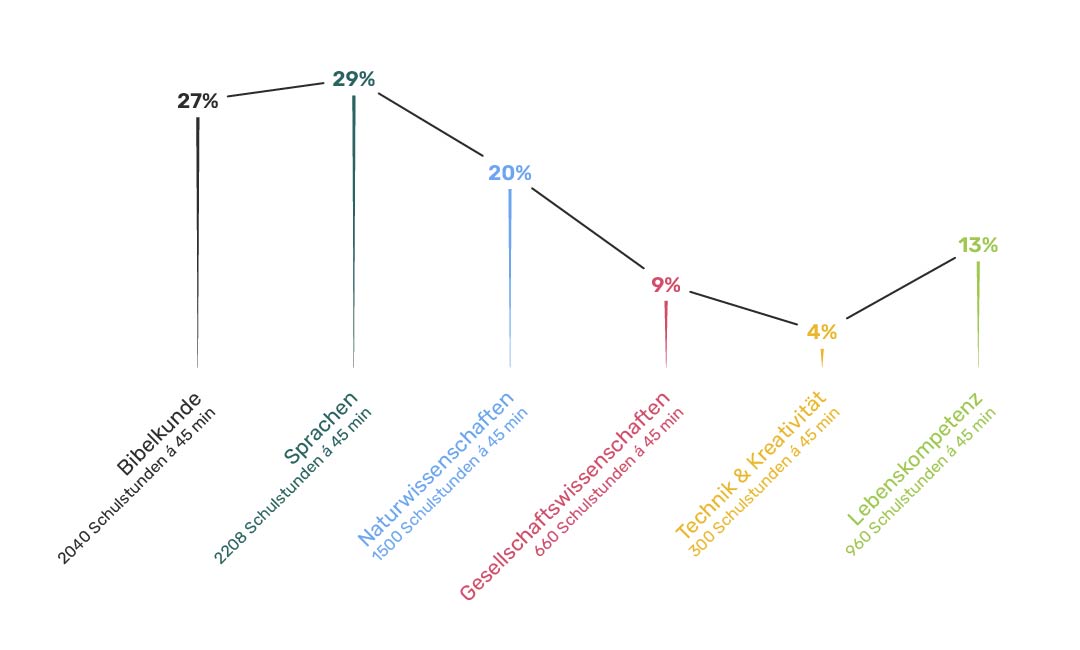
THS.Homeschool's curriculum does not follow fixed textbooks, but rather the skills young people need for independent living. These skills have been derived from real-world demands in daily life, the professional world, and faith-based living – over 1,400 in total.
Our allocation of hours is therefore not primarily based on traditional subjects, but on areas of competence.
Subjects & School Lessons for Grades 3-11
Skills - an example
For us, the focus isn't on the curriculum, but on what children truly need to learn and be able to do—skill by skill.
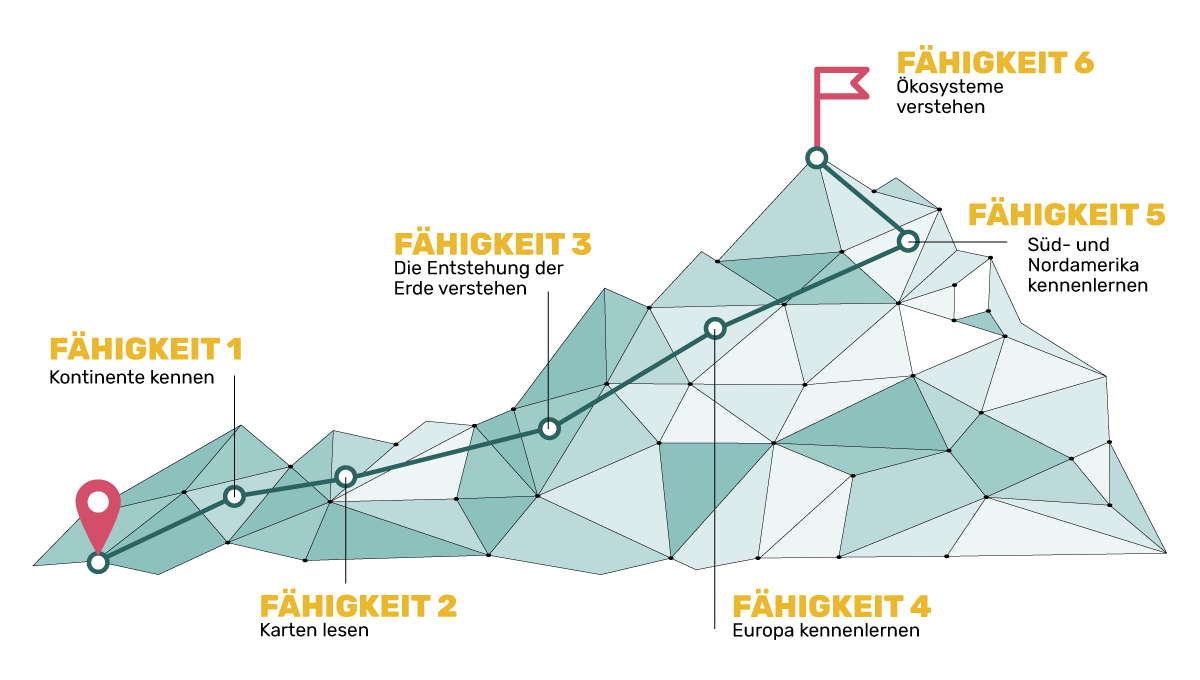
In 5th-grade geography, for example, students acquire six fundamental skills:
You will learn to name the continents, read maps, understand the formation of the Earth, get to know different regions of the world, and grasp ecological interrelationships. Each of these skills will be built up over several carefully planned lessons.
This creates a holistic understanding, and learning gains direction and depth.
Because our goal is not just to accumulate knowledge, but above all to make it practically applicable.
Capability 1
Know the continents
Scope of hours:
8 school hoursin 50 min
Course Content of the Skill:
- What is geography?
- Difference between physical and human geography
- Be able to name continents and oceans
- Fundamentalto understand the cultural and physical differences of the regions
Skill 4
Getting to know Europe
Scope of hours:
12 school hoursin 50 min
Course Content of the Skill:
- Learn European flags by heart
- Geographical Features of the Individual Regions of Europe
- General knowledge such as: capitals, languages, Religions and Cultures of the respective regions
Capability 2
Read maps
Scope of hours:
8 school hoursin 50 min
Course Content of the Skill:
Reading simple topographic maps and understanding basic terms
Practical: Find different routes to the nearest major city and list the pros and cons of each.
Skill 5
Discover South and North America
Scope of hours:
12 school hoursin 50 min
Course Content of the Skill:
- Memorize flags
- Geographical Features of the Individual Regions
- General knowledge such as: languages, Religions and Cultures
Skill 3
Understanding the formation of the Earth
Scope of hours:
8 school hoursin 50 min
Course Content of the Skill:
Comparison
Old Testament and modern science
Skill 6
Understanding ecosystems
Scope of hours:
8 school hoursin 50 min
Course Content of the Skill:
- Flora & Fauna
- Vegetation and Climate Zones
- Features
- Environmental and societal impacts
Capability 1
Know the continents
Scope of hours:
8 school hoursin 50 min
Course Content of the Skill:
- What is geography?
- Difference between physical and human geography
- Be able to name continents and oceans
- Fundamentalto understand the cultural and physical differences of the regions
Capability 2
Read maps
Scope of hours:
8 school hoursin 50 min
Course Content of the Skill:
Reading simple topographic maps and understanding basic terms
Practical: Find different routes to the nearest major city and list the pros and cons of each.
Skill 3
Understanding the formation of the Earth
Scope of hours:
8 school hoursin 50 min
Course Content of the Skill:
Comparison
Old Testament and modern science
Skill 4
Getting to know Europe
Scope of hours:
12 school hoursin 50 min
Course Content of the Skill:
- Learn European flags by heart
- Geographical Features of the Individual Regions of Europe
- General knowledge such as: capitals, languages, Religions and Cultures of the respective regions
Skill 5
Discover South and North America
Scope of hours:
12 school hoursin 50 min
Course Content of the Skill:
- Memorize flags
- Geographical Features of the Individual Regions
- General knowledge such as: languages, Religions and Cultures
Skill 6
Understanding ecosystems
Scope of hours:
8 school hoursin 50 min
Course Content of the Skill:
- Flora & Fauna
- Vegetation and Climate Zones
- Features
- Environmental and societal impacts
Evaluation and Progress Measurement
Evaluation and Progress Measurement
Grading scale
participated
A+ = 100–96% = 1 (excellent)
A = 95–921 TP3T = 1– (excellent)
A- = 91–88% = 2+ (good)
B+ = 87–84% = 2 (good)
B = 83-80% = 2- (good)
B- = 79–76% = 3+ (satisfactory)
C+ = 75–72% = 3 (satisfactory)
C = 71–68% = 3– (satisfactory)
C- = 67–64% = 4+ (satisfactory)
D+ = 63–60% = 4 (satisfactory), the lowest grade that counts as a “Pass”
D = 59-56% = 4- (sufficient)
D- = 55-52% = 5+ (unsatisfactory)
F = 51-0% = 5 (unsatisfactory)
Evaluations
The performance standard is checked through written class exams, submitted projects, regular homework assignments, or even through brief oral quizzes during class.
Credits
THS works with credit points. One credit point corresponds to 30 learning hours. These can be earned both in class and through independent work.
Per academic year, we aim for 30 credit points for our students.
Stay seated
If a student is falling behind in a subject, they will either repeat that specific subject or be provided with additional materials to catch up in the following year. There is no traditional grade repetition; instead, parents and the school set the standards for each school subject. This means a child in the 7th grade could be at an 8th-grade level in German, but only at a 6th-grade level in math.
Completion
THS Homeschooling does not currently offer an accredited degree. However, graduates receive a provider certificate that graduates can use to apply to other schools/universities. Therefore, it cooperates with other providers and ensures the transferability of its graduates.
This means that parents, students, and THS jointly discuss the student's future prospects. If a child wishes to remain in the country where they currently reside, THS assists with communication with the relevant authorities.
Example USA: The US High School diploma can be obtained by international students through the GED test. This requires the necessary English skills. THS helps with preparation for this diploma.
In the medium term, THS aims to establish its own accredited degree program.
Would you like to learn more about THS.Homeschooling?
Here is the link to the free info meeting:
Are you unsure if homeschooling is right for you?
You can get information for free here:
Legal Information
Stay connected with us!
Get news, events, and insights delivered directly to your inbox.
Copyright © 2026. All rights reserved.